तुलसी विवाह पूजा विधि और कथा
Tulsi Vivah Puja Vidhi and Katha
कार्तिक शुक्ल द्वादशी का तुलसी विवाह — वृंदा और जलंधर की कथा, शालिग्राम का रहस्य, गन्ने के मंडप में सात फेरों की पूरी विधि और घर में तुलसी के नियमTulsi Vivah on Kartik Shukla Dwadashi: the story of Vrinda and Jalandhar, how Vishnu became the Shaligram, the full wedding under the sugarcane mandap, and the rules of keeping Tulsi at home
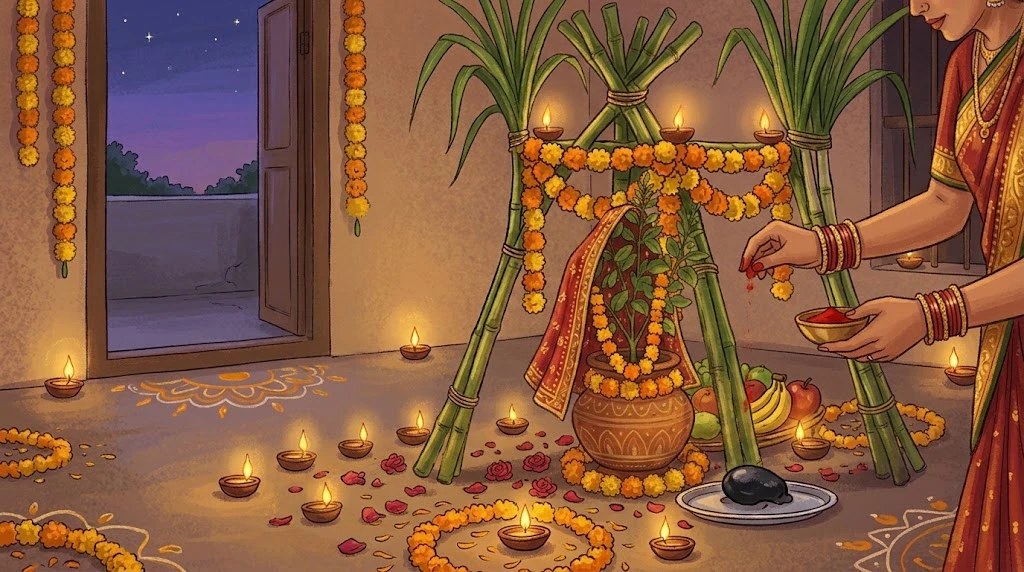
2026 मेंIn 2026
शनिवार, 21 नवंबर 2026Saturday, 21 November 2026
कार्तिक शुक्ल द्वादशी · 06:31 (21 नवंबर 2026) से 04:57 (22 नवंबर 2026) तकKartika Shukla Dwadashi · from 06:31 on 21 November 2026 to 04:57 on 22 November 2026
- प्रदोष कालPradosh kaal
- 17:21 – 19:45
PDF डाउनलोडDownload PDF
कार्तिक शुक्ल द्वादशी को, देवउठनी एकादशी के अगले दिन, तुलसी विवाह होता है। इस दिन घर के आँगन की तुलसी को लाल चुनरी ओढ़ाकर दुल्हन बनाया जाता है और भगवान विष्णु के शालिग्राम रूप से उसका विवाह कराया जाता है — पूरे विधि-विधान से, गन्ने के मंडप में, कन्यादान, अग्नि, सात फेरे और सिंदूर के साथ। परंपरा में यह वर्ष का पहला विवाह है; इसके बाद ही चातुर्मास में रुके मनुष्यों के विवाह शुरू होते हैं।
तुलसी विवाह के पीछे वृंदा की कथा है — एक पतिव्रता स्त्री की, जिसकी निष्ठा ने उसके पति को अजेय बना दिया था, और जिसके शाप से स्वयं नारायण पत्थर हो गए। उसी वृंदा का अंश तुलसी का पौधा है, और उसी से किया गया वचन यह विवाह है। जो माता-पिता कन्यादान का पुण्य चाहते हैं पर जिनके घर कन्या नहीं है, वे विशेष रूप से तुलसी विवाह करते हैं। नीचे कथा है, फिर विवाह की पूरी विधि, और अंत में घर में तुलसी रखने के नियम।
On Kartik Shukla Dwadashi, the day after Dev Uthani Ekadashi, comes the Tulsi Vivah. On this day the tulsi plant in the courtyard is draped in a red chunari and dressed as a bride, and is married to Vishnu in his form as the Shaligram, with the full rite: a mandap of sugarcane, kanyadaan, the fire, seven pheras and sindoor. By tradition this is the first wedding of the year; only after it do the weddings of men and women, held back through the chaturmas, begin.
Behind Tulsi Vivah is the story of Vrinda, a faithful wife whose devotion made her husband invincible, and whose curse turned Narayana himself to stone. The tulsi plant is Vrinda's own self, and this wedding is the promise made to her. Parents who want the merit of kanyadaan, the giving away of a daughter, but have no daughter at home, perform the Tulsi Vivah with special care. Below is the story, then the wedding step by step, and finally the rules of keeping Tulsi at home.
तुलसी विवाह की कथाThe story of Tulsi Vivah
प्राचीन काल में समुद्र से उत्पन्न एक महाबली दैत्य था — जलंधर। कहते हैं वह शिव के तृतीय नेत्र के तेज से सागर में जन्मा था, इसलिए उसमें देवताओं जैसा बल था, पर स्वभाव दैत्यों का। उसका विवाह कालनेमि की पुत्री वृंदा से हुआ। वृंदा जन्म से ही भगवान विष्णु की भक्त थी और पतिव्रता भी — पति ही उसके लिए धर्म था। उसने मन, वचन और कर्म से कभी पति के सिवा किसी का विचार नहीं किया।
वृंदा की इस निष्ठा में एक अद्भुत शक्ति थी। जब तक उसका पतिव्रत अखंड रहता, जलंधर को कोई नहीं हरा सकता था। जलंधर ने इस बल के सहारे पहले राजाओं को, फिर देवताओं को जीत लिया। उसने इंद्र का राज्य ले लिया, ऋषियों को सताया, और अंत में कैलाश पर चढ़कर शिव से ही युद्ध करने लगा। शिव ने उस पर प्रहार किए, पर वह मरता ही नहीं था — हर घाव पर वृंदा की तपस्या कवच बनकर खड़ी थी। घर में वृंदा उस समय पति की विजय के लिए अनुष्ठान में बैठी थी और उसने प्रण लिया था कि जब तक पति लौटें, वह आसन से नहीं उठेगी।
देवता हताश होकर भगवान विष्णु के पास गए। 'प्रभु, जलंधर को तीनों लोकों में कोई नहीं मार सकता जब तक वृंदा का सतीत्व अखंड है। कोई उपाय करें।' विष्णु धर्म-संकट में पड़े — वृंदा उनकी ही भक्त थी, और उसका व्रत तोड़ना अधर्म था। पर तीनों लोक जलंधर के आतंक में थे। अंत में संसार की रक्षा के लिए उन्होंने एक कठोर निर्णय लिया। उन्होंने जलंधर का रूप धारण किया और वृंदा के महल में पहुँचे।
वृंदा ने 'पति' को लौटते देखा तो प्रसन्नता से आसन छोड़कर उठी, उनके चरण स्पर्श किए और युद्ध से लौटे पति का स्वागत किया। उसी क्षण उसका प्रण टूट गया। दूर कैलाश पर जलंधर का कवच गिर गया, और शिव के त्रिशूल ने उसका सिर काट दिया। जलंधर का कटा सिर वृंदा के महल में आकर गिरा। वृंदा ने उसे देखा, फिर अपने सामने खड़े 'पति' को देखा — और उसकी तपस्या की दृष्टि से सब समझ गई। उसने कहा, 'तुम मेरे पति नहीं हो। तुम कौन हो?' विष्णु अपने रूप में प्रकट हुए।
वृंदा का दुःख क्रोध बन गया। 'नारायण! मैंने जीवन भर तुम्हारी पूजा की, और तुमने ही छल से मेरा व्रत तोड़ा, मेरे पति को मरवाया। तुम्हारा हृदय पत्थर का है, तो पत्थर ही हो जाओ!' यह शाप था, और एक सती का शाप भगवान भी नहीं टाल सकते। विष्णु उसी क्षण काले पत्थर में बदल गए — यही शालिग्राम है, जो आज भी गंडकी नदी से निकलता है और विष्णु के रूप में पूजा जाता है। कुछ कथाओं में वृंदा ने यह भी कहा कि जैसे उसे पति-वियोग मिला, वैसे ही विष्णु को भी एक जन्म में पत्नी-वियोग भोगना होगा — और कहते हैं, यही राम-अवतार में सीता-वियोग बना।
देवता और लक्ष्मी जी घबराए — पत्थर हुए नारायण के बिना संसार कैसे चलेगा? सबने वृंदा से प्रार्थना की। वृंदा का क्रोध उतरा तो केवल दुःख बचा। उसने शाप को इतना शिथिल किया कि भगवान पत्थर के रूप में भी पूजे जाएँ और भक्तों के लिए प्रकट हों। फिर उसने पति के शव के साथ अग्नि में प्रवेश किया। जहाँ उसकी भस्म गिरी, वहाँ एक छोटा-सा हरा पौधा उगा, जिसकी गंध से सारा वातावरण पवित्र हो गया — यही तुलसी है।
विष्णु ने तुलसी के पौधे के पास खड़े होकर कहा, 'वृंदा, तुमने जो खोया, वह मेरे कारण खोया। आज से तुम तुलसी के रूप में मुझे लक्ष्मी से भी अधिक प्रिय रहोगी। मेरी कोई पूजा तुम्हारे पत्ते बिना पूरी नहीं होगी; मेरा कोई भोग तुलसी दल बिना मैं ग्रहण नहीं करूँगा। और तुम्हारा पतिव्रत मैं स्वयं निभाऊँगा — हर वर्ष कार्तिक शुक्ल द्वादशी को मैं शालिग्राम के रूप में तुमसे विवाह करूँगा, और जो मनुष्य यह विवाह कराएगा, उसे कन्यादान का पुण्य और मेरा लोक मिलेगा।'
तब से हर वर्ष कार्तिक शुक्ल द्वादशी को तुलसी विवाह होता है। आँगन की तुलसी दुल्हन बनती है, शालिग्राम दूल्हा, और घर के लोग कन्या-पक्ष बनकर कन्यादान करते हैं। जिस विष्णु ने वृंदा का व्रत तोड़ा था, वे हर वर्ष उसके द्वार पर बाराती बनकर आते हैं — यह प्रायश्चित भी है और प्रेम भी। कहते हैं, जो दंपती तुलसी विवाह कराते हैं, उनके घर में सौभाग्य और संतान-सुख रहता है, और जिनके विवाह में बाधा हो, उनकी बाधा दूर होती है।
In ancient times there was a mighty demon born of the ocean, Jalandhar. It is said he was born in the sea from the fire of Shiva's third eye, so he had the strength of the gods but the nature of a demon. He was married to Vrinda, the daughter of Kalanemi. Vrinda had been a devotee of Vishnu from birth, and she was a pativrata, a wife wholly faithful; her husband was her dharma. In thought, word and deed she never once looked at anyone but him.
There was a strange power in Vrinda's faithfulness. As long as her vow remained unbroken, no one could defeat Jalandhar. On the strength of it Jalandhar conquered first the kings and then the gods. He took Indra's kingdom, tormented the sages, and finally climbed Kailash to make war on Shiva himself. Shiva struck him again and again, but he would not die; over every wound Vrinda's austerity stood like armour. At home, Vrinda was seated in a rite for her husband's victory and had vowed not to rise from her seat until he returned.
In despair the gods went to Vishnu. 'Lord, no one in the three worlds can kill Jalandhar while Vrinda's chastity is unbroken. Find a way.' Vishnu was caught in a dilemma: Vrinda was his own devotee, and to break her vow was adharma. But the three worlds were in terror of Jalandhar. In the end, to save the world, he took a hard decision. He assumed the form of Jalandhar and came to Vrinda's palace.
When Vrinda saw her 'husband' returning she rose from her seat in joy, touched his feet and welcomed him home from the war. In that instant her vow was broken. Far away on Kailash, Jalandhar's armour fell, and Shiva's trident took off his head. The severed head of Jalandhar came and fell in Vrinda's palace. She looked at it, then at the 'husband' standing before her, and with the sight that her austerity had given her she understood everything. She said, 'You are not my husband. Who are you?' Vishnu appeared in his own form.
Vrinda's grief turned to anger. 'Narayana! All my life I worshipped you, and it was you who broke my vow by deceit and had my husband killed. If your heart is stone, then become stone!' It was a curse, and even the Lord cannot turn aside the curse of a sati. Vishnu turned that moment into black stone. This is the Shaligram, which to this day is found in the Gandaki river and worshipped as Vishnu. In some tellings Vrinda added that as she had been parted from her husband, so Vishnu too would in one birth be parted from his wife, and it is said that this became the separation from Sita in the avatar of Rama.
The gods and Lakshmi were in dismay: how would the world go on with Narayana turned to stone? All of them pleaded with Vrinda. When her anger ebbed, only grief remained. She softened the curse so far that the Lord would be worshipped even in the form of stone and would reveal himself to his devotees. Then she entered the fire with her husband's body. Where her ashes fell, a small green plant sprang up, and its fragrance made the whole air pure. This is the tulsi.
Vishnu stood by the tulsi plant and said, 'Vrinda, what you lost, you lost because of me. From today, as Tulsi, you will be dearer to me than Lakshmi herself. No worship of mine will be complete without your leaf; no offering will I accept without a sprig of tulsi. And your vow of marriage I will keep myself: every year on Kartik Shukla Dwadashi I will marry you in the form of the Shaligram, and whoever performs this wedding will receive the merit of kanyadaan and a place in my realm.'
Since then Tulsi Vivah is held every year on Kartik Shukla Dwadashi. The tulsi in the courtyard becomes the bride, the Shaligram the groom, and the family becomes the bride's side and gives her away. The Vishnu who broke Vrinda's vow comes to her door every year as the bridegroom's party; it is atonement and it is love. It is said that a couple who perform the Tulsi Vivah keep good fortune and the joy of children in their home, and that those whose marriage is obstructed find the obstruction removed.
विवाह की विधिThe wedding, step by step
दिन और समय: तुलसी विवाह कार्तिक शुक्ल द्वादशी को होता है; बहुत से घर इसे देवउठनी एकादशी की संध्या को ही कर लेते हैं, और कुछ द्वादशी से पूर्णिमा तक किसी भी दिन। विवाह का समय संध्या का प्रदोष काल है — सूर्यास्त के बाद का समय, जैसे मनुष्यों के विवाह में। इस वर्ष की तिथि और मुहूर्त पंचांग से देख लें।
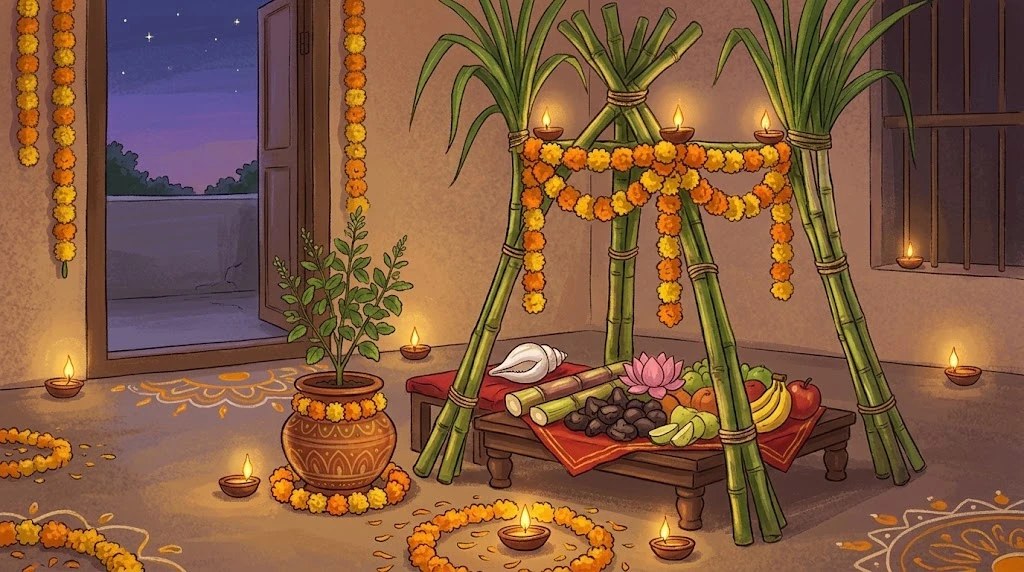
सामग्री: घर की तुलसी का गमला; शालिग्राम या भगवान विष्णु/श्रीकृष्ण की मूर्ति या चित्र; चार या पाँच गन्ने मंडप के लिए; लाल चुनरी, चूड़ियाँ, बिंदी, सिंदूर, मेहँदी, छोटा मंगलसूत्र या हार, नाक की नथ — तुलसी के लिए दुल्हन का सामान; दूल्हे के लिए पीला वस्त्र और छोटी पगड़ी या मौली; कलश, नारियल, आम के पत्ते; हल्दी, रोली, अक्षत, चंदन, फूल और मालाएँ; धूप, घी के दीपक; हवन कुंड और समिधा, या कम-से-कम एक बड़ा दीपक अग्नि के लिए; मौसमी फल — गन्ना, बेर, सिंघाड़ा, आँवला, शकरकंद, मूली — और मिठाई; पंचामृत; रंगोली की सामग्री।
तैयारी: दोपहर में आँगन या छत के उस स्थान को धोकर रंगोली बनाएँ। तुलसी के गमले को बीच में रखें और उसके चारों कोनों पर गन्ने खड़े करके ऊपर से बाँध दें — यही मंडप है। मंडप को फूलों, आम के पत्तों और लाल चुनरी से सजाएँ। गमले पर स्वस्तिक बनाएँ और उसे हल्दी-रोली से रँगें। पास में एक चौकी पर लाल कपड़ा बिछाकर दूल्हे का आसन बनाएँ।
दुल्हन का शृंगार: तुलसी के पौधे को जल से स्नान कराएँ, फिर उस पर लाल चुनरी ओढ़ाएँ। गमले को चूड़ियाँ, मंगलसूत्र या हार, बिंदी और नथ से सजाएँ। पत्तों पर हल्दी-रोली का हल्का स्पर्श करें और गमले पर मेहँदी के छोटे चिह्न बनाएँ। तुलसी अब दुल्हन है।
दूल्हे का शृंगार: शालिग्राम को पंचामृत और गंगाजल से स्नान कराएँ (मूर्ति या चित्र हो तो उसे भी)। पीला वस्त्र पहनाएँ, चंदन का तिलक करें, फूल-माला पहनाएँ और सिर पर मौली या छोटी पगड़ी बाँधें। दूल्हे को चौकी पर तुलसी के सामने, पूर्व या उत्तर मुख, विराजित करें।
पूजा का आरंभ: प्रदोष काल में घर के सब लोग मंडप के पास बैठें। सबसे पहले कलश स्थापित करें और गणेश जी का स्मरण करें — 'ॐ गं गणपतये नमः'। हाथ में जल-अक्षत लेकर संकल्प लें कि हम आज भगवान शालिग्राम और तुलसी का विवाह सम्पन्न करा रहे हैं। तुलसी को 'ॐ तुलस्यै नमः' और भगवान को 'ॐ नमो भगवते वासुदेवाय' से प्रणाम करें। घर की स्त्रियाँ मंगल गीत और विवाह के बन्ने-बन्नी गीत गाएँ — जैसे घर की बेटी के विवाह में।
कन्यादान: घर के वरिष्ठ दंपती — या जो दंपती यह विवाह करा रहे हों — तुलसी के कन्या-पक्ष बनते हैं। पति तुलसी के गमले को दोनों हाथों से थामे और पत्नी उस पर जल की धार दे; फिर दोनों तुलसी को शालिग्राम के समक्ष अर्पित करें — 'हम अपनी कन्या तुलसी को भगवान नारायण को समर्पित करते हैं।' यही कन्यादान है, और परंपरा में इसका पुण्य घर की बेटी के कन्यादान के बराबर माना जाता है। कन्यादान के बाद तुलसी और शालिग्राम को एक ही माला या मौली से जोड़ दें — यह गठबंधन है।
अग्नि और फेरे: हवन कुंड में अग्नि प्रज्वलित करें, या बड़े घी के दीपक को ही अग्नि मानें, और उसमें घी-तिल-जौ की कुछ आहुतियाँ दें। फिर घर का कोई पुरुष शालिग्राम को दोनों हाथों में उठाए और तुलसी की सात परिक्रमा करे — यही सात फेरे हैं। हर फेरे पर स्त्रियाँ गीत गाएँ और घंटी बजे। कुछ परिवारों में तुलसी के गमले और शालिग्राम दोनों को अग्नि की परिक्रमा कराई जाती है; दोनों रीतियाँ चलती हैं।
सिंदूरदान: सात फेरों के बाद शालिग्राम की ओर से तुलसी को सिंदूर अर्पित करें — पत्तों के पास गमले पर या चुनरी पर। तुलसी को मंगलसूत्र पहनाएँ। इसके बाद भगवान और तुलसी की संयुक्त आरती करें। ऊपर दी गई कथा पढ़ें या सुनें। फिर मौसमी फल, गन्ना, बेर, सिंघाड़ा, आँवला और मिठाई का भोग लगाएँ और सभी को प्रसाद दें — विवाह का भोज। परिवार साथ भोजन करे; इस दिन तुलसी के पत्ते नहीं तोड़े जाते।
समापन: अगले दिन मंडप के गन्ने और चुनरी को सम्मान से उतारें। गन्ने प्रसाद रूप में बाँटें, चुनरी वर्ष भर तुलसी पर या पूजा-घर में रखें। जिन घरों में तुलसी विवाह पहली बार हुआ हो, वहाँ इसे हर वर्ष करने का संकल्प लिया जाता है। तुलसी विवाह के साथ ही घर में और समाज में विवाहों का मौसम खुल जाता है।
Day and time: Tulsi Vivah is held on Kartik Shukla Dwadashi; many homes perform it on the evening of Dev Uthani Ekadashi itself, and some on any day from Dwadashi up to the full moon. The time of the wedding is the pradosh window, the hours after sunset, just as in the weddings of men and women. Check this year's tithi and muhurta in the panchang.
Things needed: the household tulsi in its pot; a Shaligram, or an image or picture of Vishnu or Krishna; four or five sugarcane stalks for the mandap; a red chunari, bangles, a bindi, sindoor, mehndi, a small mangalsutra or necklace and a nose ring, the bride's things for Tulsi; yellow cloth and a small turban or mauli thread for the groom; a kalash, a coconut and mango leaves; turmeric, roli, akshat, sandal paste, flowers and garlands; incense and ghee lamps; a havan kund and firewood, or at least one large lamp to stand for the fire; the fruits of the season, sugarcane, ber, water chestnut, amla, sweet potato and radish, and sweets; panchamrit; materials for rangoli.
Preparation: in the afternoon wash the spot in the courtyard or on the roof and draw a rangoli. Set the tulsi pot in the centre, stand a sugarcane stalk at each corner and tie the tops together; this is the mandap. Decorate it with flowers, mango leaves and a red chunari. Draw a swastika on the pot and colour it with turmeric and roli. Beside it, spread a red cloth on a chauki as the groom's seat.
Dressing the bride: bathe the tulsi plant with water, then drape the red chunari over it. Dress the pot with bangles, the mangalsutra or necklace, the bindi and the nose ring. Touch the leaves lightly with turmeric and roli, and draw small mehndi marks on the pot. Tulsi is now the bride.
Dressing the groom: bathe the Shaligram with panchamrit and Ganga water (and the image or picture, if that is what you have). Dress him in yellow cloth, mark him with sandal, garland him and tie the mauli or a small turban on his head. Seat the groom on the chauki facing the tulsi, towards the east or north.
Opening the puja: in the pradosh window the whole family sits at the mandap. First set up the kalash and remember Ganesha with 'Om Gam Ganapataye Namah'. Take water and akshat in the hand and make the sankalp that today you are performing the wedding of Lord Shaligram and Tulsi. Bow to Tulsi with 'Om Tulasyai Namah' and to the Lord with 'Om Namo Bhagavate Vasudevaya'. The women of the house sing the mangal songs and the wedding songs of bride and groom, just as at the wedding of a daughter of the house.
Kanyadaan: the senior couple of the house, or the couple performing the wedding, become Tulsi's family. The husband holds the tulsi pot with both hands and the wife pours a stream of water over it; then both offer Tulsi before the Shaligram: 'We give our daughter Tulsi to Lord Narayana.' This is the kanyadaan, and by tradition its merit equals that of giving away a daughter of the house. After the kanyadaan, join Tulsi and the Shaligram with a single garland or mauli thread; this is the gathbandhan, the tying of the knot.
The fire and the pheras: light the fire in the havan kund, or take the large ghee lamp as the fire, and offer a few oblations of ghee, sesame and barley. Then a man of the house lifts the Shaligram in both hands and walks around the tulsi seven times; these are the seven pheras. At every round the women sing and the bell rings. In some families both the tulsi pot and the Shaligram are carried around the fire; both customs are followed.
Sindoor: after the seven pheras, offer sindoor to Tulsi on the Shaligram's behalf, on the pot near the leaves or on the chunari. Put the mangalsutra on Tulsi. Then do the joint aarti of the Lord and Tulsi. Read or listen to the story above. Offer the seasonal fruit, sugarcane, ber, water chestnut, amla and sweets, and give everyone prasad: this is the wedding feast. The family eats together; no tulsi leaves are plucked on this day.
Closing: the next day take down the sugarcane and the chunari with respect. Share the sugarcane as prasad and keep the chunari on the tulsi or in the puja room through the year. Homes that have held the Tulsi Vivah for the first time take a vow to hold it every year. With the Tulsi Vivah the wedding season opens, in the home and in the community.
तुलसी का महत्व और घर में तुलसी के नियमWhy Tulsi matters and the rules of keeping Tulsi at home
तुलसी भगवान विष्णु को लक्ष्मी से भी अधिक प्रिय है — यह वृंदा को दिया गया वचन है। इसी कारण विष्णु, कृष्ण और राम की कोई पूजा तुलसी दल बिना पूरी नहीं मानी जाती, और मंदिरों का चरणामृत और भोग तुलसी के पत्ते के साथ ही दिया जाता है। तुलसी की माला से जप और गले में तुलसी की कंठी वैष्णव परंपरा की पहचान है। घर में तुलसी का होना ही घर को पवित्र मानने का कारण है — कहते हैं जिस आँगन में तुलसी है, वहाँ यम के दूत नहीं आते। आयुर्वेद में तुलसी खाँसी, ज्वर और श्वास के रोगों की औषधि है, और उसका पौधा हवा को शुद्ध करता है; धर्म और स्वास्थ्य दोनों इस पौधे में मिलते हैं।
घर में तुलसी रखने के कुछ नियम पीढ़ियों से चले आ रहे हैं। तुलसी को घर के उत्तर, पूर्व या उत्तर-पूर्व (ईशान) में रखें, दक्षिण में नहीं; उसे ऐसी जगह रखें जहाँ धूप आए और उसके आसपास स्वच्छता रहे — जूते-चप्पल, झाड़ू और कूड़ा उससे दूर हों। प्रतिदिन सुबह स्नान के बाद तुलसी को जल दें और संध्या को उसके पास घी का दीपक जलाएँ। रविवार और एकादशी को तुलसी में जल नहीं दिया जाता और न पत्ते तोड़े जाते हैं — माना जाता है कि इन दिनों तुलसी स्वयं विष्णु के लिए व्रत रखती हैं। संध्या के बाद, और बिना आवश्यकता, तुलसी के पत्ते नहीं तोड़ते; तोड़ते समय नाखून नहीं लगाते, उँगलियों के पोरों से तोड़ते हैं और पहले प्रणाम करते हैं।
तुलसी दल भगवान विष्णु, कृष्ण, राम और हनुमान जी को चढ़ाया जाता है, पर शिव और गणेश जी को नहीं — यह परंपरा का स्पष्ट नियम है। चढ़ाया हुआ तुलसी दल बासी नहीं माना जाता; उसे धोकर फिर अर्पित किया जा सकता है, और तुलसी का कोई पत्ता कूड़े में न जाए — गमले की मिट्टी में या बहते जल में डालें। यदि पौधा सूख जाए तो उसे नदी या बहते जल में या किसी स्वच्छ मिट्टी में विसर्जित करें और नया पौधा लगाएँ; सूखी तुलसी को घर में रखना अच्छा नहीं माना जाता। कार्तिक मास में तुलसी के पास प्रतिदिन दीपक जलाना और तुलसी विवाह कराना विशेष पुण्य का काम है। घर में तुलसी रोज़ थोड़ा समय माँगती है — और उतना ही समय हमें रोज़ भगवान की याद दिलाती है।
Tulsi is dearer to Vishnu than Lakshmi herself; that is the promise made to Vrinda. For this reason no worship of Vishnu, Krishna or Rama is counted complete without a tulsi leaf, and the charanamrit and prasad of temples are given with a tulsi leaf in them. Chanting on a tulsi mala and wearing a tulsi kanthi at the throat are the marks of the Vaishnava tradition. A tulsi in the house is itself the reason a house is held pure; it is said that the messengers of Yama do not enter a courtyard where tulsi grows. In Ayurveda tulsi is the medicine for cough, fever and ailments of the breath, and the plant cleans the air; faith and health meet in this one plant.
Some rules for keeping tulsi at home have come down through generations. Keep the plant in the north, east or north-east of the house, never in the south; keep it where it gets sunlight and where the surroundings are clean, with shoes, brooms and rubbish well away from it. Water it every morning after bathing, and light a ghee lamp beside it at dusk. Tulsi is not watered and its leaves are not plucked on Sundays and on Ekadashi; it is believed that on these days Tulsi herself keeps a fast for Vishnu. Leaves are not plucked after dusk, nor without need; when plucking, do not use the nails but the tips of the fingers, and bow first.
Tulsi leaves are offered to Vishnu, Krishna, Rama and Hanuman, but not to Shiva or Ganesha; this is a clear rule of the tradition. An offered tulsi leaf is never considered stale; it can be washed and offered again, and no tulsi leaf should go into the rubbish, only into the soil of the pot or into flowing water. If the plant dries up, immerse it in a river or flowing water or in clean earth and plant a new one; keeping a dead tulsi in the house is not thought well of. In the month of Kartik, lighting a lamp beside the tulsi every day and performing the Tulsi Vivah are acts of special merit. A tulsi at home asks for a little time every day, and for exactly that long every day it reminds us of the Lord.
महत्व और फलMeaning and fruit
परंपरा के अनुसार तुलसी विवाह कराने वाले दंपती को कन्यादान का पुण्य मिलता है — इसीलिए जिनके घर कन्या नहीं है, वे इसे विशेष श्रद्धा से करते हैं। कहते हैं कि इससे घर में सौभाग्य, धन और संतान-सुख बना रहता है, दांपत्य में प्रेम रहता है, और जिन कन्याओं या युवकों के विवाह में बाधा आ रही हो, उनकी बाधा दूर होती है। वृंदा की कथा का संदेश यह है कि निष्ठा में ऐसी शक्ति है कि भगवान भी उसके ऋणी हो जाते हैं — और अपना ऋण हर वर्ष चुकाते हैं।
तुलसी विवाह चातुर्मास के बाद का पहला मंगल कार्य है, इसलिए यह घर के वर्ष भर के मांगलिक कार्यों का शुभारंभ माना जाता है। जिनके घर में इस वर्ष विवाह होना है, जिनकी कुंडली में विवाह का योग देर से बन रहा हो, या जो दांपत्य-सुख की कामना रखते हों, उनके लिए यह दिन विशेष बताया जाता है।
By tradition a couple who perform the Tulsi Vivah receive the merit of kanyadaan, which is why homes without a daughter do it with special devotion. It is said to keep good fortune, wealth and the joy of children in the house, to keep love between husband and wife, and to remove the obstacles of young women and men whose marriage is being delayed. The message of Vrinda's story is that faithfulness has such power that even the Lord becomes its debtor, and pays that debt every year.
Tulsi Vivah is the first auspicious rite after the chaturmas, and so it is taken as the opening of the household's auspicious work for the year ahead. The day is said to matter especially to families with a wedding coming this year, to those whose charts show marriage forming late, and to those who pray for happiness in married life.
आरतीAarti
फेरों और सिंदूरदान के बाद तुलसी माता की आरती 'जय जय तुलसी माता' गाई जाती है, और उसके साथ भगवान विष्णु की आरती 'ॐ जय जगदीश हरे'। आरती के बाद गन्ने, बेर, सिंघाड़े और मिठाई का प्रसाद बाँटें और विवाह का भोज करें।
After the pheras and the sindoor, the Tulsi aarti 'Jai Jai Tulsi Mata' is sung, and with it the Vishnu aarti 'Om Jai Jagdish Hare'. After the aarti, share the prasad of sugarcane, ber, water chestnut and sweets and sit down to the wedding feast.
कब पढ़ेंWhen to read
यह कथा कार्तिक शुक्ल द्वादशी (या देवउठनी एकादशी) की संध्या को, तुलसी विवाह के मंडप में, फेरों के बाद और आरती से पहले पढ़ी या सुनी जाती है।This katha is read or heard on the evening of Kartik Shukla Dwadashi (or of Dev Uthani Ekadashi), at the Tulsi Vivah mandap, after the pheras and before the aarti.
कुंडली मेंIn your kundli
तुलसी विवाह विवाह का उत्सव है, और कुंडली में विवाह शुक्र और बृहस्पति से देखा जाता है — शुक्र विवाह, प्रेम, दांपत्य-सुख और पुरुष की कुंडली में पत्नी का कारक है, और बृहस्पति स्त्री की कुंडली में पति और विवाह-काल का; तुलसी स्वयं विष्णु-प्रिया हैं, जिनके ग्रह बृहस्पति हैं। यदि आपकी कुंडली में शुक्र या बृहस्पति नीच के, अस्त या पाप ग्रहों से पीड़ित हों, सप्तम भाव या सप्तमेश कमज़ोर हो, या विवाह में विलंब हो रहा हो, तो तुलसी विवाह, तुलसी की सेवा और गुरुवार-शुक्रवार के व्रत उपाय रूप में बताए जाते हैं। आप इसी साइट पर अपनी कुंडली बनाकर अपने शुक्र, बृहस्पति और सप्तम भाव की स्थिति देख सकते हैं।Tulsi Vivah is a festival of marriage, and in the kundli marriage is read from Venus and Jupiter: Venus stands for marriage, love, married happiness and, in a man's chart, the wife; Jupiter, in a woman's chart, for the husband and the timing of marriage, and Tulsi herself is the beloved of Vishnu, whose graha is Jupiter. If your Venus or Jupiter is debilitated, combust or afflicted by malefics, if the seventh house or its lord is weak, or if marriage is being delayed, the Tulsi Vivah, daily care of a tulsi plant and the Thursday and Friday fasts are given as remedies. Build your kundli on this site and check the condition of your Venus, your Jupiter and your seventh house.
ग्रह: Grahas: शुक्रVenus, बृहस्पतिJupiter
अपनी कुंडली में देखेंCheck it in your kundliप्रश्नोत्तरQuestions people ask
- तुलसी विवाह एकादशी को करें या द्वादशी को?Should Tulsi Vivah be done on Ekadashi or on Dwadashi?
- शास्त्रीय दिन कार्तिक शुक्ल द्वादशी है, देवउठनी एकादशी का अगला दिन। पर उत्तर भारत के बहुत से घरों में देव जगाने के साथ एकादशी की संध्या को ही तुलसी विवाह कर लिया जाता है, और कुछ परिवार द्वादशी से कार्तिक पूर्णिमा तक किसी भी दिन करते हैं। अपने परिवार या क्षेत्र की रीति मानें; समय दोनों दिन प्रदोष काल का है। इस वर्ष की तिथि पंचांग से देख लें।The scriptural day is Kartik Shukla Dwadashi, the day after Dev Uthani Ekadashi. But many homes in north India perform the Tulsi Vivah on the evening of Ekadashi itself along with the waking of the gods, and some families do it on any day from Dwadashi to Kartik Purnima. Follow your family's or region's custom; on either day the time is the pradosh window. Check this year's tithi in the panchang.
- तुलसी विवाह कौन कर सकता है? क्या अविवाहित कन्या कर सकती है?Who can perform the Tulsi Vivah? Can an unmarried woman do it?
- कोई भी गृहस्थ तुलसी विवाह कर सकता है। कन्यादान प्रायः विवाहित दंपती करते हैं — विशेषकर वे जिनके घर कन्या नहीं है, क्योंकि उन्हें कन्यादान का पुण्य मिलता है। अविवाहित कन्याएँ और युवक भी तुलसी विवाह में भाग ले सकते हैं और अच्छे वर या वधू की कामना से तुलसी की पूजा करते हैं; कन्यादान का भाग माता-पिता या घर के वरिष्ठ करें। विधवा स्त्रियाँ भी तुलसी पूजा और कथा कर सकती हैं।Any householder may perform the Tulsi Vivah. The kanyadaan is usually done by a married couple, especially one without a daughter at home, since they receive the merit of giving a daughter away. Unmarried women and men may take part too and worship Tulsi with the wish for a good spouse; the kanyadaan itself is done by the parents or the elders of the house. Widows may also perform the Tulsi puja and read the katha.
- तुलसी विवाह की सामग्री में क्या-क्या चाहिए?What is needed for the Tulsi Vivah?
- तुलसी का गमला; शालिग्राम या विष्णु/कृष्ण की मूर्ति या चित्र; मंडप के लिए चार-पाँच गन्ने; तुलसी के लिए लाल चुनरी, चूड़ियाँ, बिंदी, सिंदूर, मेहँदी, मंगलसूत्र या हार, नथ; दूल्हे के लिए पीला वस्त्र और मौली; कलश, नारियल, आम के पत्ते; हल्दी, रोली, अक्षत, चंदन, फूल-मालाएँ; धूप, घी के दीपक; हवन कुंड या बड़ा दीपक; गन्ना, बेर, सिंघाड़ा, आँवला, शकरकंद, मिठाई; पंचामृत और रंगोली का सामान। जो न मिले, उसे छोड़ दें — भाव पूरा हो तो विवाह पूरा है।The tulsi in its pot; a Shaligram or an image or picture of Vishnu or Krishna; four or five sugarcane stalks for the mandap; for Tulsi a red chunari, bangles, bindi, sindoor, mehndi, a mangalsutra or necklace and a nose ring; yellow cloth and mauli thread for the groom; a kalash, coconut and mango leaves; turmeric, roli, akshat, sandal paste, flowers and garlands; incense and ghee lamps; a havan kund or a large lamp; sugarcane, ber, water chestnut, amla, sweet potato and sweets; panchamrit and rangoli materials. Leave out what you cannot find; if the feeling is complete, the wedding is complete.
- तुलसी विवाह करने से क्या फल मिलता है? विवाह में देरी हो तो?What does the Tulsi Vivah give? Does it help when marriage is delayed?
- परंपरा के अनुसार तुलसी विवाह से कन्यादान का पुण्य, घर में सौभाग्य, धन और संतान-सुख मिलता है और दांपत्य में प्रेम बना रहता है। जिन कन्याओं या युवकों के विवाह में बाधा या विलंब हो, उनके लिए तुलसी विवाह कराना और कार्तिक मास में प्रतिदिन तुलसी के पास दीपक जलाना उपाय रूप में बताया जाता है। साथ में अपनी कुंडली में शुक्र, बृहस्पति और सप्तम भाव की स्थिति भी देख लेना उचित है।By tradition the Tulsi Vivah gives the merit of kanyadaan, good fortune, wealth and the joy of children in the house, and keeps love between husband and wife. For young women and men whose marriage is obstructed or delayed, performing the Tulsi Vivah and lighting a lamp by the tulsi every day in the month of Kartik are given as remedies. It is also worth checking the condition of Venus, Jupiter and the seventh house in your own kundli.
साथ में पढ़ेंRead alongside
 व्रत कथाVrat Kathas
देवउठनी एकादशी व्रत कथा
Dev Uthani (Prabodhini) Ekadashi Vrat Katha
कार्तिक शुक्ल एकादशी — चार महीने की योगनिद्रा से भगवान विष्णु का जागना, एकादशी पर अन्न न खाने वाले राजा की कथा, व्रत के नियम, पारण और चातुर्मास का अंतKartik Shukla Ekadashi: Vishnu wakes from his four-month sleep, the katha of the king whose kingdom ate no grain on Ekadashi, the rules of the fast, the paran and the end of chaturmas
ॐ जय जगदीश हरे
Om Jai Jagdish Hare
श्री विष्णु जी की आरती, पं. श्रद्धाराम शर्मा रचित, अर्थ सहितThe Vishnu aarti written by Pandit Shardha Ram Sharma, with the meaning of every stanza